Table of Contents
Choosing the right vape accessories can be confusing when pods, tanks and coils all appear to perform similar functions. These components work together, but each has a different role inside a vaping system.
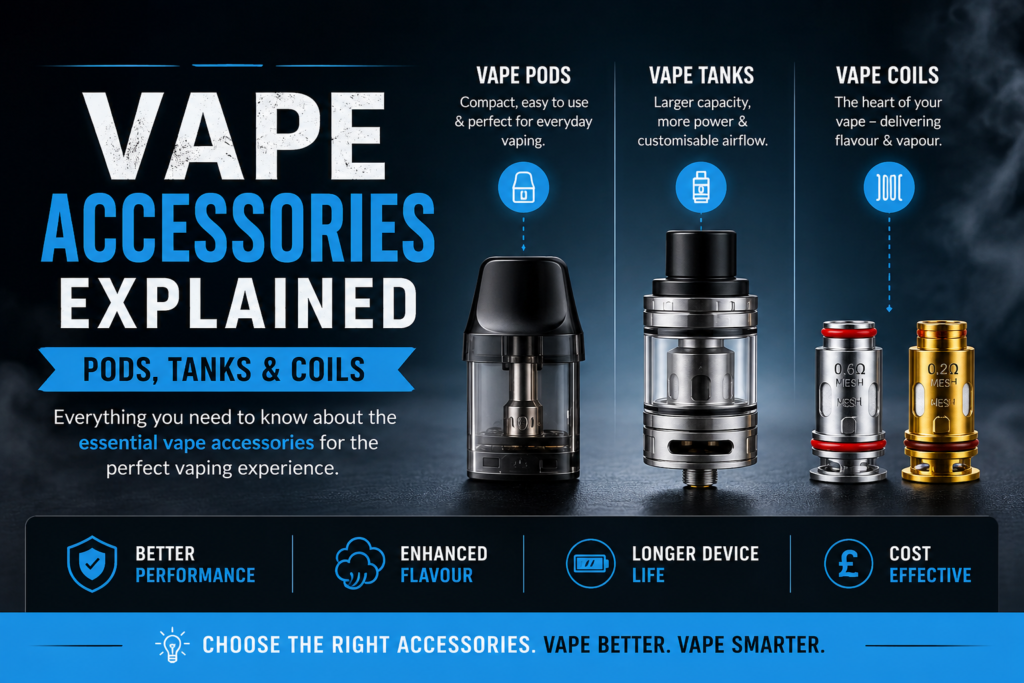
A vape pod or tank holds the e-liquid. The coil sits inside the pod or tank and heats the liquid to create vapour. Vape pods are generally used with compact pod kits, while vape tanks are commonly paired with larger vape mods. Coils are replaceable heating elements, although some pods have a coil permanently built into them.
Understanding the difference between these essential vape accessories helps you choose compatible replacement parts, avoid leaks and burnt coils, improve flavour and get better performance from your device.
This guide explains what vape pods, tanks and coils are, how they work together, when they should be replaced and which type may suit your vaping style.
What Are Vape Accessories?
The term vape accessories covers the additional, replaceable and supporting parts used with an electronic cigarette or vape device.
Common vape accessories include:
- Vape pods
- Vape tanks
- Vape coils
- Replacement glass
- Drip tips
- Charging cables
- External batteries
- Battery chargers
- Protective cases
- Lanyards
- Cleaning tools
Some accessories are optional. A protective case or lanyard may make a device easier to carry, but the vape can still work without it.
Pods, tanks and coils are different because they are essential components. A refillable vape cannot produce vapour without an e-liquid container and a functioning coil.
Although retailers usually place pods, tanks and coils within a broader vape accessories category, they can also be described more accurately as replacement vape parts or vaping components.
Vape Pods, Tanks and Coils at a Glance
| Vape accessory | Main function | Commonly used with | Replacement method |
|---|---|---|---|
| Vape pod | Holds e-liquid and houses the coil | Pod vape kits | Replace the pod or its removable coil |
| Vape tank | Holds e-liquid and houses a replaceable coil | Vape mods and advanced kits | Replace the coil, glass or complete tank |
| Vape coil | Heats e-liquid to create vapour | Vape pods and vape tanks | Replace when flavour or performance declines |
The easiest way to understand the system is:
- The pod or tank stores the e-liquid
- The coil absorbs and heats the e-liquid
- The battery supplies power
- The mouthpiece delivers the vapour
What Are Vape Pods?
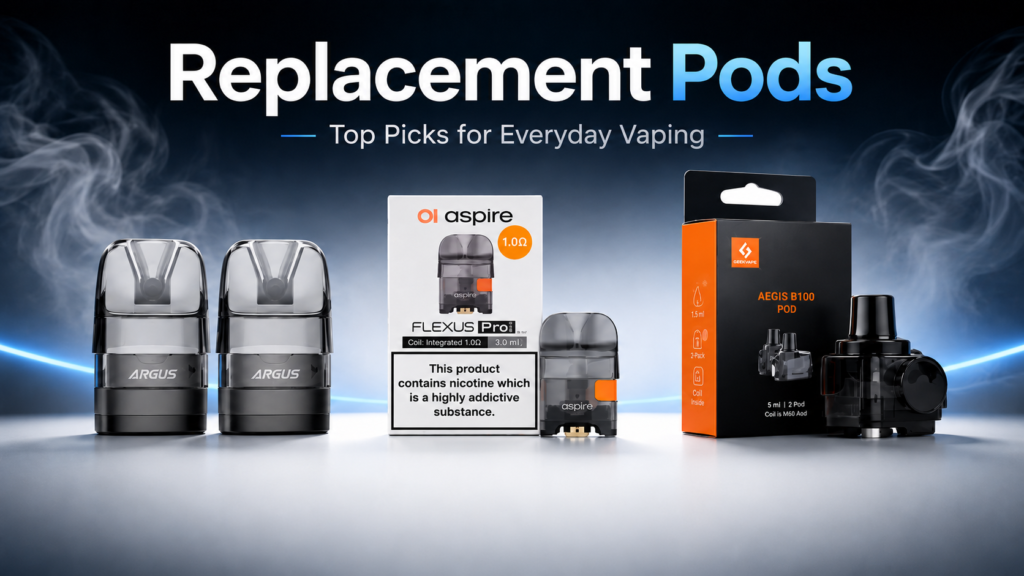
Vape pods are small cartridges designed for use with pod vape kits. They store e-liquid, house the coil and usually include an integrated mouthpiece.
Most pods connect to the device through a magnetic, push-fit or click-fit connection. Unlike a traditional vape tank, a pod usually does not screw onto the battery through a standard threaded connector.
Pods for vape devices are popular because they are compact, simple to use and easy to replace. They are commonly used for mouth-to-lung and restricted direct-to-lung vaping.
Main Features of Vape Pods
Most vape pods offer some or all of the following features:
- Compact plastic construction
- Integrated mouthpiece
- Magnetic or push-fit connection
- Refillable or prefilled design
- Built-in or replaceable coil
- Side-fill, top-fill or bottom-fill port
- Transparent section for checking e-liquid
- Compatibility with a specific device range
Vape pods are normally designed for a particular brand, device or product family. A pod that looks similar to another model may still have a different connection, airflow layout or coil system.
Always check the exact device name before buying replacement vape pods.
What Is a Pod Vape?
A pod vape is a complete vaping device that uses a pod instead of a conventional glass-and-metal tank.
A typical pod kit contains:
- A rechargeable battery device
- A removable vape pod
- A built-in or replaceable coil
- An airflow system
- An automatic draw sensor, fire button or both
Basic pod kits may have fixed power and automatic draw activation. More advanced pod devices can include adjustable wattage, screens, airflow controls and multiple operating modes.
Pod vapes are often recommended to adult smokers switching to vaping because they are usually easier to operate than advanced vape mods.
When Should You Replace a Vape Pod?
A refillable pod may need replacing when:
- The built-in coil tastes burnt
- Flavour becomes consistently weak
- Vapour production drops noticeably
- The pod is cracked or damaged
- The filling seal no longer closes properly
- E-liquid leaks repeatedly
- The magnetic connection becomes loose
- The mouthpiece is damaged
- The pod has become permanently discoloured
If the pod uses removable coils, you may only need to replace the coil. The pod itself can often continue to be used until its seals or structure begin to fail.
What Are Vape Tanks?
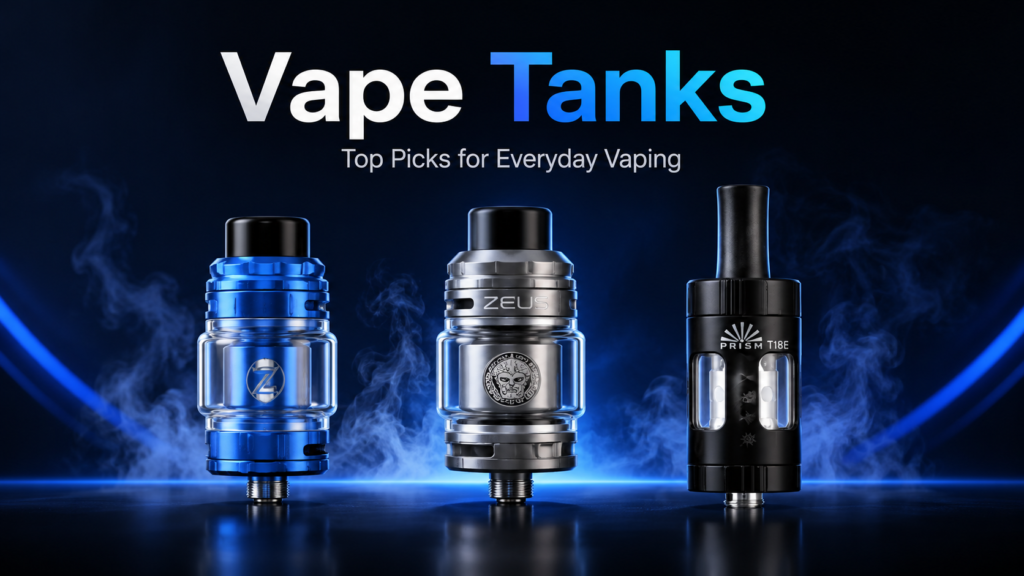
Vape tanks are refillable e-liquid reservoirs commonly used with vape mods and larger vape kits.
Like vape pods, tanks hold e-liquid and contain a coil. However, vape tanks are usually made from several separate metal, glass and silicone components rather than a single plastic cartridge.
A typical vape tank includes:
- A drip tip or mouthpiece
- Top cap
- Filling port
- Glass reservoir
- Central chimney
- Replaceable coil
- Airflow control ring
- Threaded base
- Connection pin
Most tanks connect to compatible vape mods using a 510 thread. This standard connection gives users more flexibility to pair a tank with different devices, provided the mod safely supports the coil’s resistance and wattage requirements.
Types of Vape Tanks
Different vaping tanks are designed for different draw styles, power levels and user experience.
Mouth-to-Lung Vape Tanks
Mouth-to-lung tanks are designed to create a tighter draw that resembles the inhalation style of smoking a cigarette.
They generally use:
- Higher-resistance coils
- Lower wattage
- Restricted airflow
- Smaller e-liquid channels
- Lower vapour production
- Thinner e-liquids
MTL vape tanks may suit users who prefer a discreet vape, a tighter inhale and lower e-liquid consumption.
Sub-Ohm Vape Tanks
Sub-ohm tanks use coils with a resistance below 1.0 ohm. They are generally designed for restricted direct-to-lung or direct-to-lung vaping.
Common features include:
- Lower-resistance coils
- Higher wattage ranges
- Wider airflow
- Larger e-liquid inlets
- Warmer vapour
- Increased vapour production
- Stronger flavour intensity
Sub-ohm tanks usually consume more e-liquid and battery power than mouth-to-lung pods or tanks.
They are normally paired with lower-nicotine, higher-VG e-liquids. High-strength nicotine liquids may be unsuitable because sub-ohm devices create a much larger volume of vapour.
Rebuildable Vape Tanks
Rebuildable tanks allow users to install and wick their own heating coils.
Common types include:
- Rebuildable Tank Atomisers, or RTAs
- Rebuildable Dripping Atomisers, or RDAs
- Rebuildable Dripping Tank Atomisers, or RDTAs
These systems offer greater control over coil material, resistance, airflow and wicking. However, they require a proper understanding of battery safety, resistance and coil building.
Rebuildable tanks are generally better suited to experienced users than beginners.
When Should You Replace a Vape Tank?
Unlike a built-in-coil pod, a complete vape tank does not normally need to be replaced every time the coil wears out.
You may need to replace the complete tank when:
- The metal body is damaged
- The threads are stripped
- The tank no longer connects securely
- The airflow mechanism is broken
- Replacement parts are no longer available
- Leaking continues despite changing the coil and seals
A cracked glass reservoir can often be replaced separately. Many vape tanks also allow users to replace O-rings, mouthpieces and other small parts.
What Are Vape Coils?
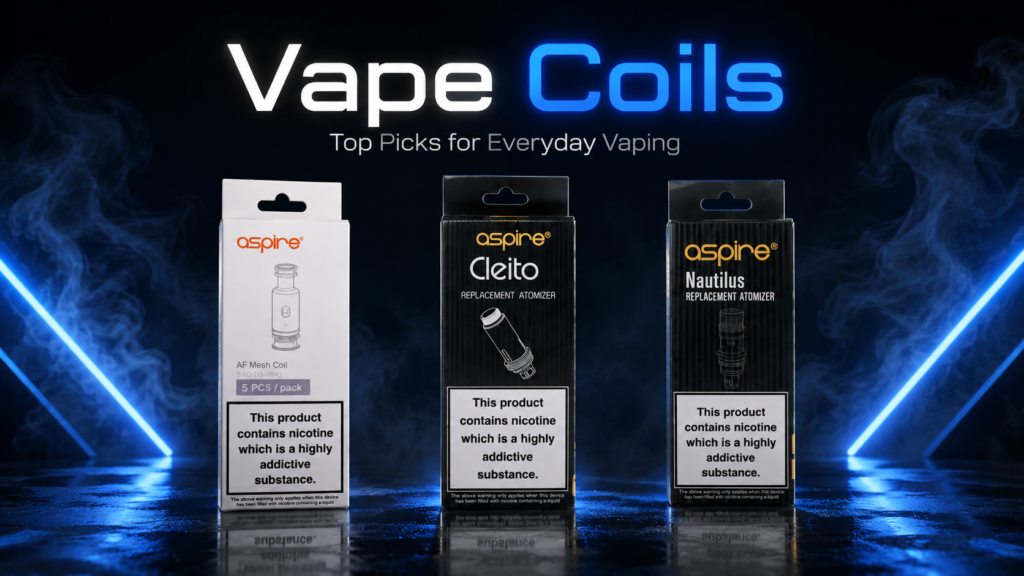
Vape coils are heating components installed inside vape pods and tanks. The coil absorbs e-liquid and heats it until it becomes vapour.
A replacement coil normally contains:
- A metal heating element
- Absorbent cotton or another wick
- A metal outer housing
- E-liquid inlet openings
- Airflow channels
- Electrical contacts
- Silicone sealing rings
When the user activates the device, the battery sends power to the coil. The heating element becomes hot and vaporises the liquid held by the cotton.
The condition and design of the coil directly affect:
- Flavour
- Vapour production
- Vapour temperature
- Airflow
- E-liquid consumption
- Battery consumption
- Overall draw quality
How Does a Vape Coil Work?
A coil for a vape works through a simple process:
- E-liquid enters the coil through small inlet openings.
- Cotton inside the coil absorbs the liquid.
- The device supplies electrical power.
- The metal heating element increases in temperature.
- The absorbed e-liquid turns into vapour.
- Vapour travels through the mouthpiece and is inhaled.
The cotton must remain saturated with e-liquid. If the coil is activated while dry, the cotton can burn and create a harsh, unpleasant taste.
This is known as a dry hit.
What Is a Mesh Coil Vape?
A mesh coil vape uses a perforated metal sheet or strip rather than a traditional round wire heating element.
Mesh coils have a broader heating surface, allowing more of the wick to be heated at the same time.
Potential benefits include:
- Faster heating
- More even heat distribution
- Consistent flavour
- Smoother vapour
- Reduced likelihood of isolated hot spots
- Efficient e-liquid vaporisation
Mesh technology is now widely used in both vape pods and sub-ohm replacement coils.
However, the term “mesh coil” does not indicate universal compatibility. You must still choose a coil that is specifically designed for your pod or tank.
Standard Wire Coils vs Mesh Coils
| Feature | Standard wire coil | Mesh coil |
|---|---|---|
| Heating element | Round wire | Perforated metal strip |
| Heating area | Smaller | Larger |
| Heat distribution | More concentrated | More even |
| Ramp-up time | May be slower | Usually faster |
| Flavour | Depends on build | Often consistent and strong |
| Common use | Traditional and rebuildable systems | Modern pods and tanks |
Both types can provide a good vaping experience when correctly matched to the device, e-liquid and wattage.
What Does Coil Resistance Mean?
Vape coil resistance is measured in ohms and displayed using the symbol Ω.
The resistance influences how much power the coil draws and the type of vaping experience it creates.
Higher-Resistance Vape Coils
Coils with resistances such as 0.8Ω, 1.0Ω or 1.2Ω are commonly used for mouth-to-lung vaping.
They generally provide:
- Lower wattage requirements
- Tighter airflow
- Cooler vapour
- Reduced e-liquid use
- Longer battery life
- Discreet vapour production
Higher-resistance coils are often paired with 50/50 e-liquids and nicotine salts.
Lower-Resistance Vape Coils
Coils such as 0.2Ω, 0.4Ω or 0.6Ω are commonly used for restricted direct-to-lung and direct-to-lung vaping, depending on the device.
They generally create:
- Warmer vapour
- More open airflow
- Greater vapour production
- Higher wattage requirements
- Faster battery consumption
- Increased e-liquid usage
Resistance alone does not determine the correct power setting. Always follow the wattage range printed on the coil or supplied by the manufacturer.
How Long Do Vape Coils Last?
There is no fixed lifespan for vaping coils. Many coils last anywhere from several days to approximately two weeks, but actual performance depends on the user and e-liquid.
Factors affecting coil life include:
- Frequency of vaping
- Length of each puff
- Selected wattage
- Coil resistance
- E-liquid sweetness
- PG/VG ratio
- Coil design
- Airflow setting
- Correct priming
- Whether the pod or tank is allowed to run low
Sweet e-liquids often leave residue on the heating element and cotton. This residue can reduce flavour and shorten the coil’s usable life.
Heavy users may need replacement coils more frequently than occasional users.
Signs That a Vape Coil Needs Replacing
Replace a vape coil or built-in-coil pod when you notice:
- Burnt or scorched flavour
- Muted e-liquid flavour
- Reduced vapour production
- Harshness at the normal wattage
- Persistent gurgling
- Flooding or leaking
- Darkened e-liquid
- Slow coil response
- Visible residue around the cotton
A burnt coil cannot normally be repaired by adding more liquid. Once the cotton has been scorched, the coil should be replaced.
How Vape Pods, Tanks and Coils Work Together
These essential vape accessories form one system.
- The pod or tank stores the e-liquid.
- The coil absorbs e-liquid into its cotton wick.
- The battery sends power to the coil.
- The heating element turns the liquid into vapour.
- The vapour passes through the mouthpiece.
If any component is incompatible or damaged, the entire vaping experience can be affected.
For example:
- A damaged pod can leak
- A cracked tank can lose e-liquid
- A burnt coil can ruin the flavour
- An incompatible coil may not connect
- Incorrect wattage can damage the wick
- Unsuitable e-liquid can cause flooding or dry hits
How to Choose Compatible Vape Accessories
Do not choose a pod, tank or coil based only on appearance or resistance.
Check the following details:
Exact Device Name
Find the complete brand and model name of your device. Similar names may refer to different product generations.
Supported Pod or Tank Range
Check which pods or tanks are officially listed as compatible with the device.
Coil Family
Manufacturers often produce several coil series. Coils from the same brand are not necessarily interchangeable.
Coil Resistance
Choose a resistance that supports your preferred draw style and power level.
Recommended Wattage
Make sure your device can safely operate within the coil’s printed wattage range.
E-Liquid Type
Choose an appropriate PG/VG ratio and nicotine strength for the coil and vaping style.
Activation and Airflow
Some pods are designed for automatic draw, while others work best with button activation or adjustable airflow.
Which E-Liquid Should You Use?
The appropriate e-liquid depends on the coil, wattage and vaping style.
For Higher-Resistance Pods and MTL Tanks
These systems generally work best with thinner liquids, often around a balanced 50/50 PG/VG ratio.
They are commonly used with:
- Nicotine salts
- Freebase nicotine e-liquids
- Moderate nicotine strengths
- Lower wattage
For Lower-Resistance Coils and Sub-Ohm Tanks
These systems may support thicker, higher-VG liquids.
They are commonly used with:
- Shortfill e-liquids
- Lower nicotine strengths
- Higher wattage
- More open airflow
High-strength nicotine liquids are generally unsuitable for high-powered sub-ohm vaping because the user inhales a much larger volume of vapour.
Common Mistakes When Buying Vape Accessories
Buying the Wrong Pod
Pods are usually device-specific. Similar appearance does not guarantee compatibility.
Choosing a Coil by Resistance Alone
A 0.8Ω coil will not fit every 0.8Ω device.
Confusing Pods with Coils
Some devices require the complete pod to be replaced, while others accept separate coils.
Ignoring the Recommended Wattage
Using too much power can burn the coil. Using too little power can cause weak vapour or flooding.
Using the Wrong E-Liquid
An unsuitable PG/VG ratio can cause leaking, poor wicking or dry hits.
Firing a New Coil Too Soon
The cotton needs time to absorb e-liquid before activation.
Forcing a Coil into Place
If a coil does not fit easily and securely, it may be incompatible or incorrectly aligned.
Continuing to Use a Burnt Coil
A burnt coil cannot normally be restored. Continuing to use it will produce poor flavour and an unpleasant experience.
Final Thoughts
Vape pods, tanks and coils are among the most important vape accessories because they directly control how e-liquid is stored, heated and converted into vapour.
A vape pod is a compact cartridge designed for a pod kit. It may contain a built-in coil or accept a separate replacement coil.
A vape tank is a larger e-liquid reservoir commonly used with a vape mod. It normally includes replaceable coils, adjustable airflow and separate glass and metal components.
A vape coil is the heating element inside the pod or tank. It absorbs e-liquid and turns it into vapour when the device supplies power.
Frequently Asked Questions
What are the must-have vape accessories?
The must-have vape accessories depend on the type of device you use. For most refillable vape kits, the essentials include compatible replacement coils or pods, suitable e-liquid and a USB charging cable. Vape tanks may also require spare glass and replacement seals. Optional accessories include protective cases, lanyards, drip tips and external battery chargers.
Can a vape tank go under the accessories tab?
Yes. A vape tank can be listed under a website’s vape accessories category because it is a replaceable or upgradeable component used with a compatible vape mod. For clearer navigation and stronger SEO, it is better to create a dedicated Vape Tanks subcategory under the main accessories section rather than listing tanks only on a broad accessories page.
Can you sell vape accessories?
Yes, vape accessories such as compatible tanks, coils, refillable pods, replacement glass and charging equipment can be sold in the UK, provided the products comply with applicable regulations. Vape tanks supplied in the UK must not exceed the permitted 2ml capacity, and vaping products must not be sold to anyone under 18. Retailers should also ensure that products are genuine, correctly labelled and legally compliant.