Vaping 2026 in the UK Different? Learn more.
Table of Contents
Vaping 2026 in the United Kingdom represents a turning point in how vaping products are regulated, used and perceived. Compared with previous years, such as 2024 and 2025, the landscape has shifted clearly toward policy‑driven market transformation, consumer prioritisation of responsible products and ongoing public health debates. This article explains how the UK vaping environment has evolved, the major vaping news of 2026, and important aspects of UK vaping policy that shape how adults use and understand vape products today.
How UK Vaping Regulation Has Changed by 2026
Over the past two years, UK vaping policies have undergone a significant transformation to address public health concerns, youth use and environmental impact. While vaping continues to be legal for adults, the rules governing the sale, supply and composition of products are more structured than ever.
Nationwide Ban on Single‑Use Vapes
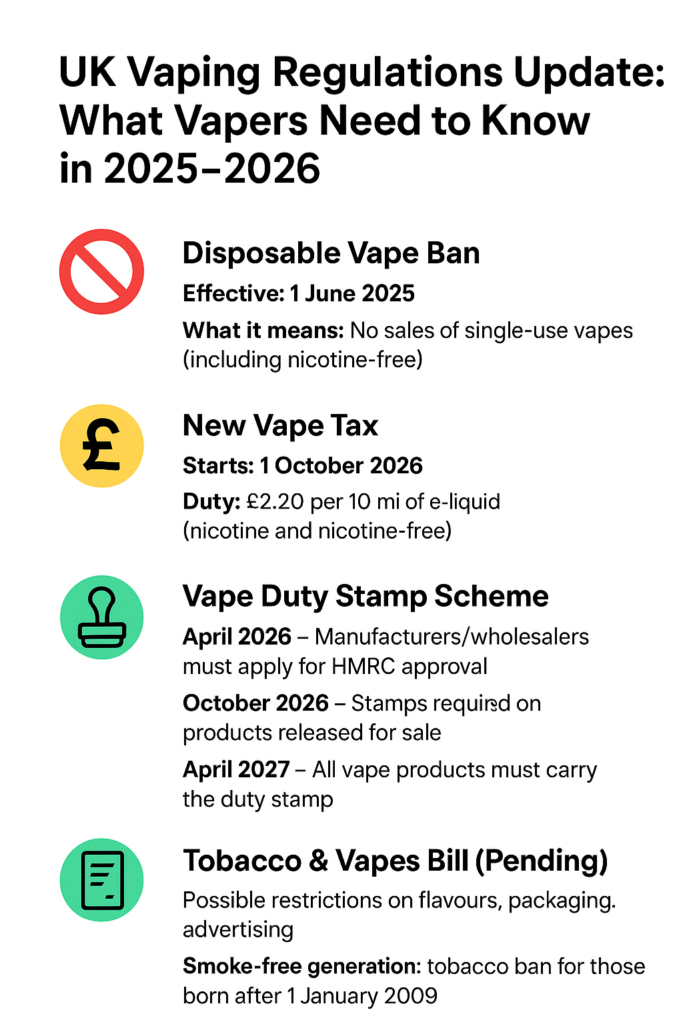
One of the most consequential regulatory changes affecting vaping 2026 in the UK came with the ban on single‑use disposable vapes. As of 1 June 2025, it became illegal for businesses to sell or supply any vape that cannot be recharged or refilled, regardless of whether it contains nicotine. Retailers caught selling single‑use vapes could face enforcement action for non‑compliance. This move was introduced by the UK Government to reduce waste and tackle underage vaping.
Key reasons behind the policy included:
- Reducing environmental harm from lithium‑ion batteries and plastic components in disposables.
- Addressing research showing large volumes of discarded vapes entering waste streams.
- Curtailing appeal of brightly packaged, flavour‑focused devices to minors.
The ban reflects a major shift from earlier years when disposable vapes were widely available and popular among users of all ages.
Vaping Products Duty From October 2026
In 2025 the UK Government announced a Vaping Products Duty, taking effect from 1 October 2026. This introduces an excise duty on vaping liquids at a flat rate of £2.20 per 10 millilitres regardless of nicotine content. The intention is to reduce the appeal and affordability of vaping products for non‑smokers, particularly younger people, while maintaining vaping as a harm reduction alternative for adult smokers.
This duty represents one of the first major tax measures specifically targeting the vaping sector in the UK and may change market pricing dynamics in late 2026.
Continued Consumer‑Level Restrictions
Existing UK vaping rules under the Tobacco and Related Products Regulations (TRPR) continued to apply through 2026, including:
- Sale only to adults aged 18 and over.
- Limit on nicotine concentration at 20mg/ml.
- Maximum tank or pod capacity of 2ml.
- Mandatory health warnings and packaging standards.
These regulations create a framework aimed at balancing adult access with safety and public health priorities.
Vaping 2026 vs Previous Years in the UK
The differences between vaping in 2026 and earlier periods like 2024–2025 are best illustrated in terms of market products, policy focus, and consumer behaviours.
| Aspect | Prior to 2025 | Vaping 2026 |
|---|---|---|
| Availability of disposable vapes | Widely available | Banned from sale |
| Regulation focus | Age verification & safety labels | Environmental impact & affordability via duties |
| Product types popular | Disposable and refillable | Rechargeable refillables dominate |
| Nicotine caps | 20mg/ml standard | Same cap maintained |
| Taxation | None specific to vaping liquids | Vaping Products Duty introduced |
This shift reflects a more mature approach to vaping policy in the UK, prioritising sustainability and reducing youth initiation while still permitting adult access.
Consumer Trends in UK Vaping 2026
Vapers in 2026 in the UK are influencing the market in ways that anticipate further policy development and public health priorities. Broadly, there are three key behavioural trends emerging:
1. Shift Toward Rechargeable and Refillable Devices
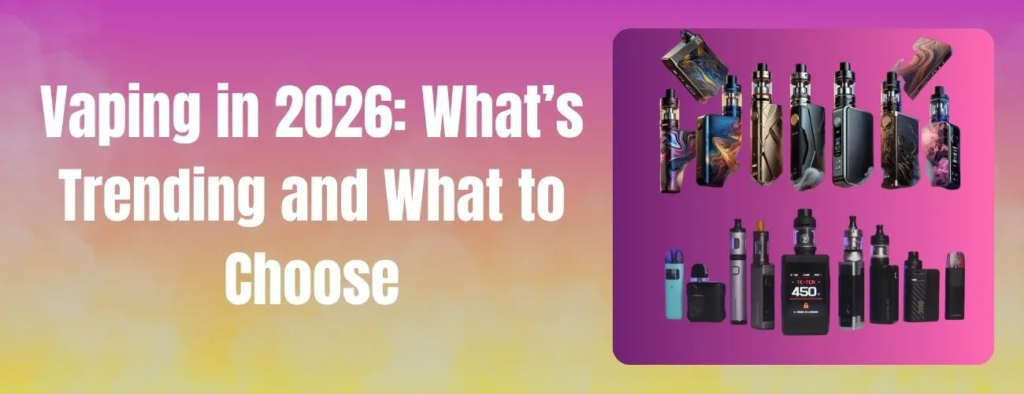
With single‑use vapes no longer on the market, most adult vapers are choosing products that offer both sustainability and long‑term cost effectiveness. Prefilled pod systems, refillable tanks and rechargeable pod kits have become common. These products maintain nicotine delivery without continual disposal issues.
2. Increased Awareness of Youth Vaping
The policy focus on protecting children from nicotine addiction has grown more pronounced. Reducing the appeal and accessibility of vaping products to under‑18s has influenced marketing, packaging and shop display practices. Retailers are expected to adhere to strict age checks and avoid promotional content that might appeal to minors.
3. Greater Attention to Environmental Impact
Discarded vape waste, including plastic components and batteries, was a driving factor behind regulatory action. UK consumers and policymakers alike are now more conscious of product lifecycle and responsible disposal. Recycling schemes and guidance for handling used vape components are increasingly emphasised.
Regulatory Developments in Vaping News 2026
In the first months of 2026, several stories and proposals have attracted attention in the UK vaping policy landscape:
Vaping in Cars With Children Under Consideration
UK news reports have highlighted government consultations proposing bans on vaping in cars carrying children, similar to existing laws on smoking. This reflects ongoing concern about second‑hand exposure and child protection. The discussions are part of broader public health initiatives that may influence future national legislation.
These proposals signal that policymakers are continuing to consider restrictions not merely on product sales but also on where vaping can be safely used.
Understanding the Public Health Debate
While vaping in 2026 remains legal for adults, it is increasingly framed in public health discussions as both a harm reduction tool and a behaviour that requires careful management to avoid unintended consequences. Public health authorities and government bodies in the UK emphasise that:
- Vaping should only be used by adults and never by children.
- Nicotine is addictive and non‑smokers should not start vaping.
- Vaping can support smoking cessation for regular smokers but carries its own risks.
This balanced messaging shapes both media reporting and policy discussions, influencing how vaping is perceived broadly in society.
Looking Ahead: Vaping in the UK Beyond 2026
As the vaping market adapts to new policies, consumer and industry stakeholders will likely respond with evolving product innovation, greater clarity in compliance requirements and ongoing public health campaigns. Potential future areas of change include:
- Further clarity on vaping in public spaces.
- Enhanced recycling and product stewardship schemes.
- Refinements to marketing and packaging standards.
These developments may continue to reshape how adults in the UK view and use vaping products.
Conclusion
Vaping 2026 in the UK reflects a regulatory and cultural evolution when compared with earlier years. The introduction of a nationwide ban on single‑use vapes, the forthcoming Vaping Products Duty, and sustained public health emphasis have reshaped both the market and consumer behaviour. While vaping remains a legal option for adults, the framework around products, sales and use exists within a context prioritising safety, environmental responsibility and reduced appeal to youth.
This period in UK vaping history underscores the importance of understanding policy as well as product choice for anyone engaging with vaping in 2026 and beyond.
Frequently Asked Questions About Vaping 2026 in the UK
Is vaping safer in 2025?
Vaping in 2025 was generally considered a less harmful alternative to smoking traditional cigarettes. Public Health England and other UK health authorities reported that using regulated nicotine vaping products carries significantly lower health risks compared with combustible tobacco. Vaping avoids many toxic chemicals produced during smoking, though it is not completely risk-free. In 2026, these insights continue to guide UK vaping policies and harm-reduction strategies. Using regulated products in moderation and following safety guidelines remains crucial.
Is vaping stopping in the UK?
Vaping is not stopping in the UK. On the contrary, it remains a widely used tool for smoking cessation and harm reduction. While regulations such as the ban on single-use disposable vapes have changed the market, adults are still legally permitted to purchase and use refillable and rechargeable devices. These changes aim to promote responsible use while preventing underage vaping, reflecting a more regulated and sustainable approach to vaping UK 2026.
Is vaping increasing in the UK?
Despite stricter regulations, vaping has continued to grow among adult smokers in the UK. Surveys indicate that many former smokers now use vaping as an alternative to reduce their cigarette consumption. The popularity of refillable devices, pod kits, and regulated e-liquids contributes to sustained growth. This trend is a key focus of vaping news in 2026, highlighting both public health benefits and evolving consumer habits.
Is the vape ban pointless in the UK?
The ban on single-use disposable vapes is not considered pointless. It was introduced to reduce environmental waste, protect youth from early nicotine exposure, and encourage the use of sustainable devices. While some users have adapted by switching to refillable devices, the policy aligns with broader public health objectives and environmental considerations. As part of vaping 2026, the ban reflects the UK’s approach to responsible vaping regulation rather than restricting adult access to safe products.